Heat Stress Biometric Monitor
September 2023 - June 2024


Objective:
Navigate the startup journey by identifying a core problem, assessing potential customer needs, conducting market analysis, and developing early-stage prototypes.
Problem Statement:
10 of the largest wildfires have happened in the 20 years and 74,000 firefighters in the U.S. have a heat illness each year. Aside from primitive methods of drinking water and sitting in the shade, there are no preventative measures to prevent heat stroke.
Solution:
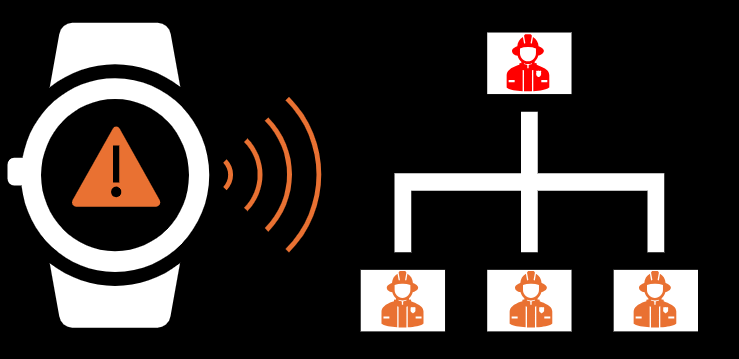
Deploy a biometric monitoring system to track key physiological indicators and provide real-time alerts of impending heat stress to both the individual and their crew supervisor.
Customer Analysis
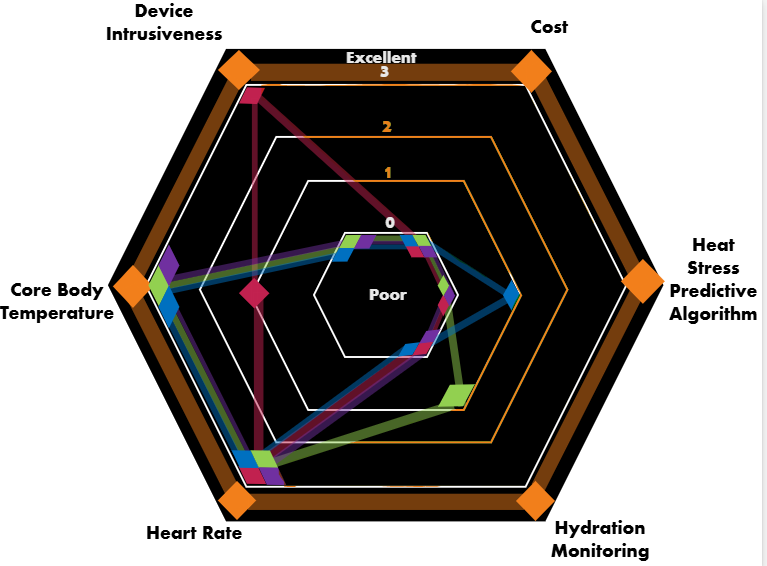
Through over 50 interviews with firefighters, we uncovered critical stakeholder insights that shaped our product strategy. These included market positioning, target users, operational norms, and cultural dynamics within the fire service. The findings directly informed our design requirements, highlighting gaps in competitor offerings such as device intrusiveness, cost, heat stress prediction, and hydration monitoring. These insights are essential for ensuring adoption.
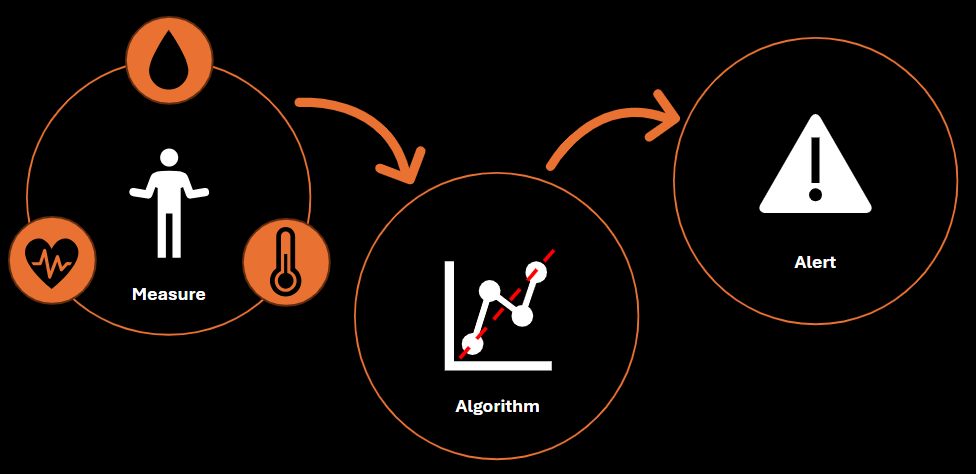
The monitor tracks core body temperature, heart rate, and hydration levels. Hydration is assessed using an optical infrared sensor that detects water content in the skin’s dermis. These three biomarkers are processed by a predictive algorithm that triggers alerts when the individual nears a heat stress threshold.
How does it work?
Prototype Hardware Selection
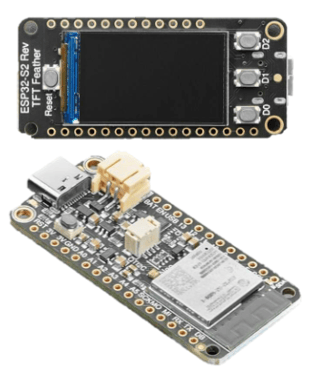
Microcontroller
Architecture – ESP32-S2
Low Power
Built in Wi-Fi connectivity
Aftermarket support online
Inexpensive
Capacitive touch sensor
Dev Board – Adafruit ESP32-S2 Reverse TFT Feather
Pinout location for BME280 temperature and humidity sensor
BMS
Screen
GPIO pins
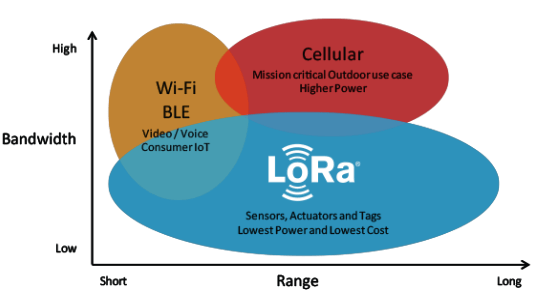
LoRa Chip
SX1231
Lower power consumption
Lower cost
Don’t need extra performance and features of other chips as LoRa is already overkill
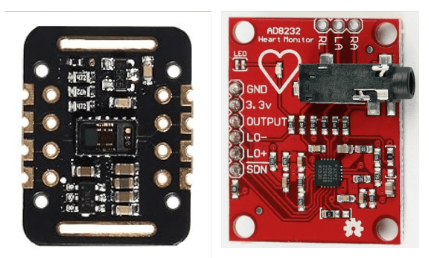
Heart Rate Sensor
Optical: MAX30102
Wrist Compatibility
Photoplethysmography (PPG)
Low noise electronic circuit
Ambient Light suppression
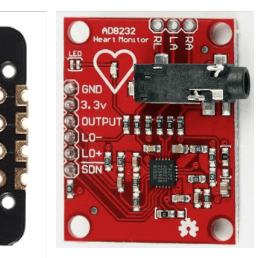
ECG: AD8232
Noise control
Analog Output
Combine Using Klaman Filtering
Top Skills Utilized
Stakeholder Research
Cross-Functional Collaboration
Market Analysis
Entrepreneurship
Competitive Analysis
Human Factors Engineering
Sensor Integration
Embedded Systems Design
Signal Processing
Takeaways
This project strengthened my ability to develop a product from the ground up, starting with problem identification, customer discovery, and market analysis. I gained hands-on experience selecting hardware components for prototyping and converting raw sensor data into actionable insights.
Although we later discovered the market for this specific solution was relatively narrow, I would continue by building a functional prototype and deploying it with firefighters or athletes to gather real-world data. I’d also explore leveraging existing smartwatches for initial data collection. With this dataset, I would begin developing a predictive algorithm based on the Kalman filter and the ISO 7933 heat strain model to forecast heat stress events.