Liquid Rocket
January 2024 - June 2024
Mission Objective:
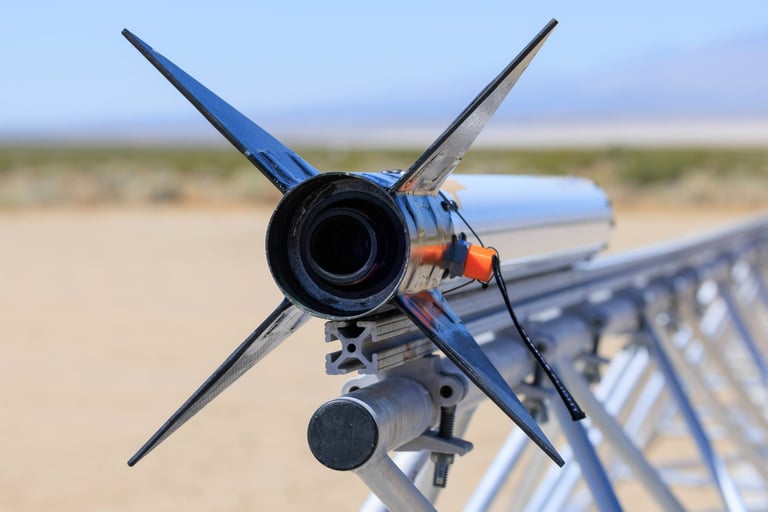
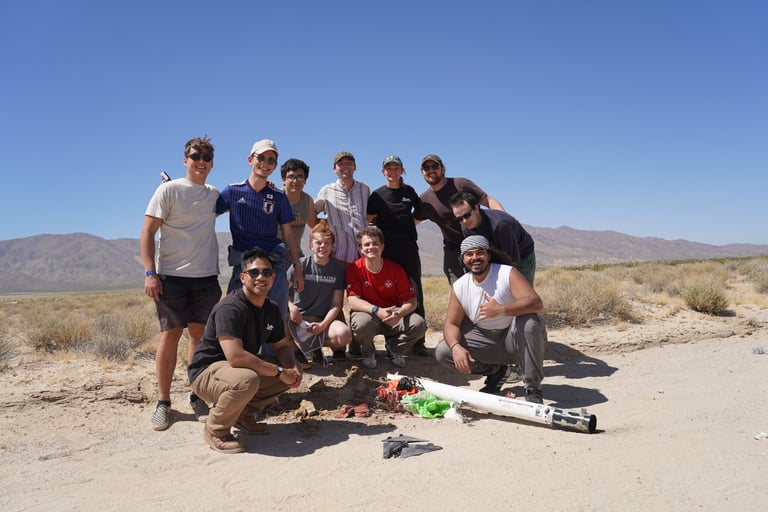
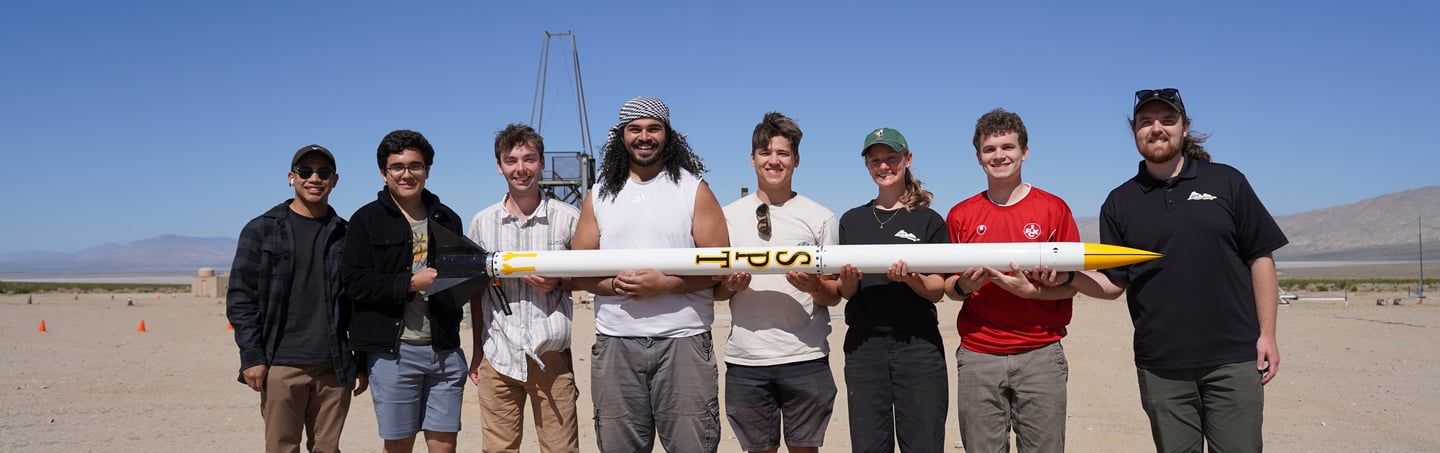
Successfully launch Cal Poly’s first liquid bi-propellant rocket and achieve full recovery with minimal damage.
Recovery System:
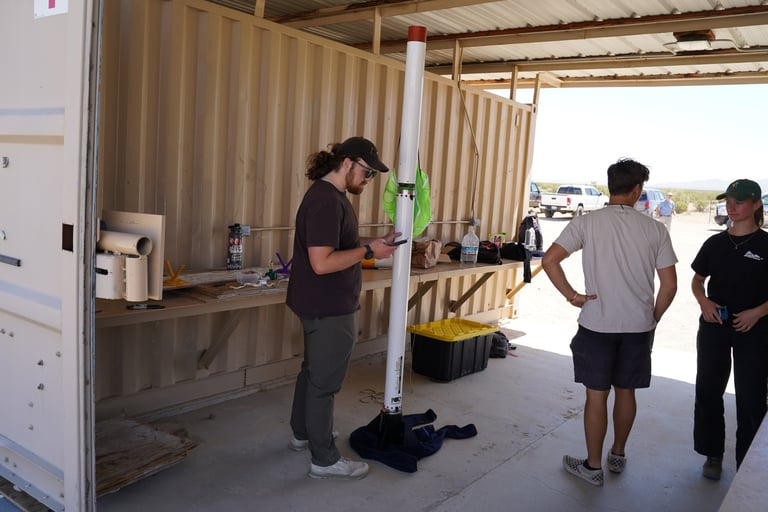
Dual-parachute deployment
Drogue chute deployed at apogee
Main chute deployed at 1,000 feet altitude
Rocket must return via main chute with nosecone and drogue securely tethered to the airframe
Post-Flight Requirements:
Rocket must be recoverable and locatable after launch
No structural damage compromising future flight capability
Acceptable minor damage includes:
Fin breakage upon landing
Nozzle impact damage
Flight Instrumentation:
Altitude tracking via two commercial off-the-shelf (COTS) components
Requirements
Test Stand
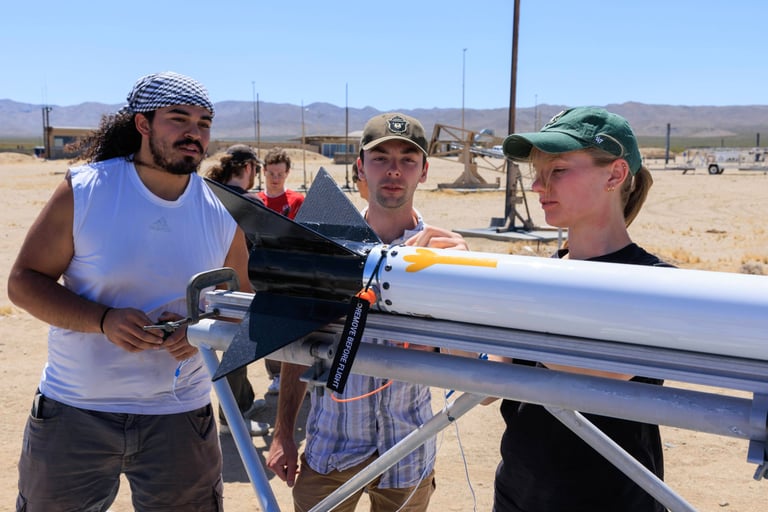
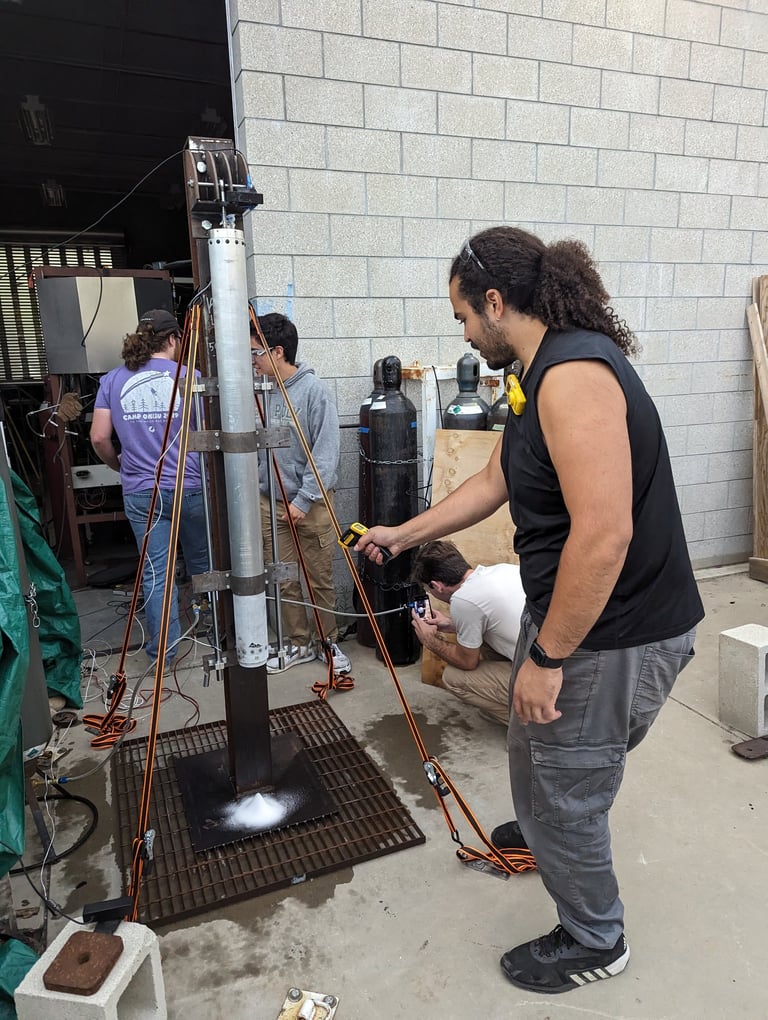
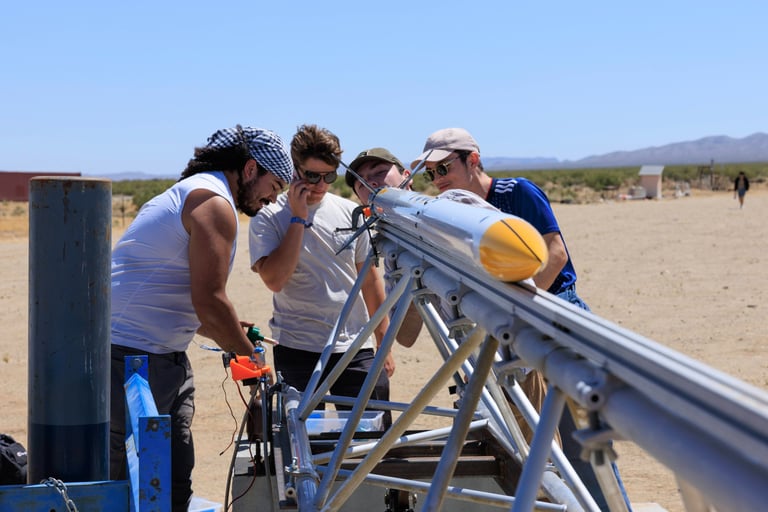
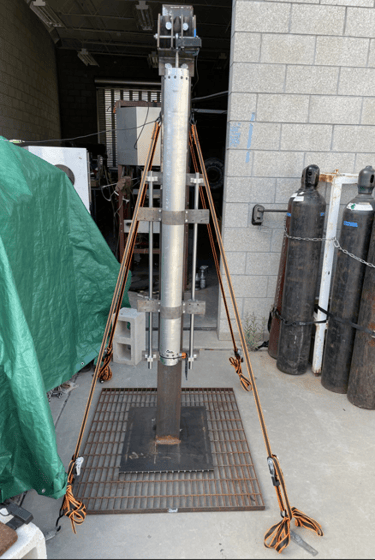
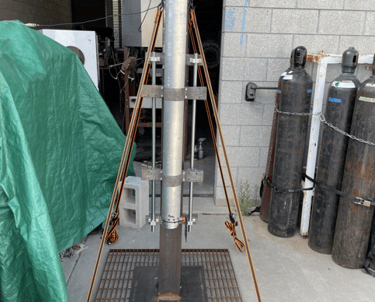
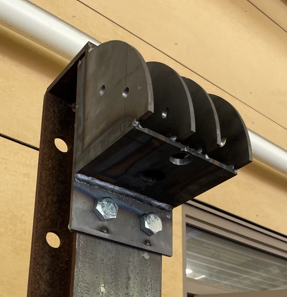
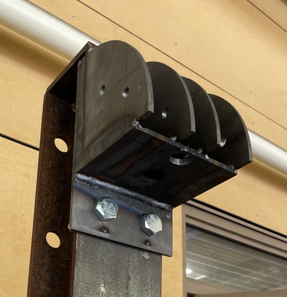
I was primarily responsible for designing and fabricating the rocket test stand, ensuring full integration with electro-mechanical components. The assembly featured an I-beam structure, linear rails, a load-bearing support, and a base plate. The rocket tank mounted to the linear rails, enabling controlled motion along a single axis, while the manifold secured to the load-bearing support via an eye bolt and load cell for thrust measurement and structural integrity. FEA was also performed on the tie down straps to ensure safety under hard start conditions.
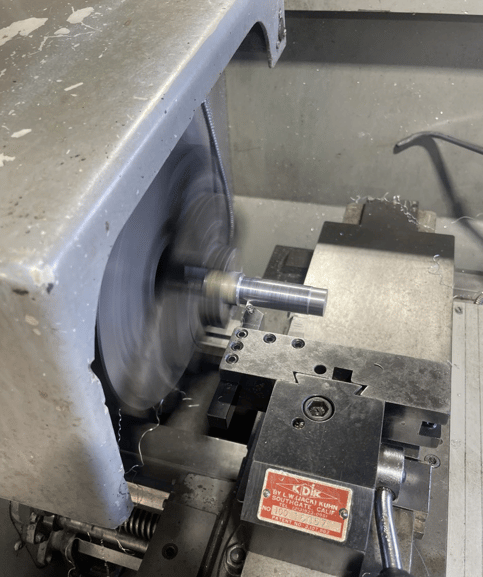
I designed the load-bearing support to be precision-cut from ¼″ steel plate using a water jet and assembled through MIG welding. The base plate was welded directly to the I-beam structure. The design was engineered to withstand three times the expected thrust load, with structural integrity verified through hand calculations and FEA. Additionally, I contributed to fabricating the ignition line cutter system, machining precision pistons on a lathe to meet tight tolerances."
Manufacturing

Top Skills Utilized
Finite Element Analysis (FEA)
Water Jet
MIG Welding
Lathe
Fusion 360
Takeaways
This project deepened my understanding of component manufacturing and designing for high factors of safety. I gained valuable experience interpreting detailed engineering drawings and actually manufacturing the parts. If I were to revisit the design, I would improve test stand mobility and integrate the base plate with ground anchors to eliminate the need for tiedown straps. I would also dedicate more attention to the recovery parachute system, as our initial deployment failed.

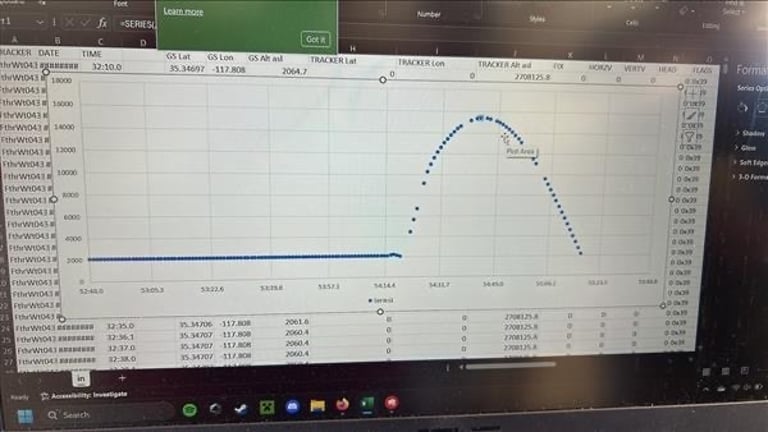
Check out our ballistic recovery at 15,300 ft!
Project Gallery